
Call Us 24/7
+91 6357173693
Send Us Mail
business@imacengineering.com

Nox Advaita needed a cleaner, stronger, and more refined medical device design that could improve durability, integration, and the overall user experience in real clinical use.
This case study covers iMAC Design and Engineering Services' comprehensive redesign of the NOX Advaita unit. The existing unit had structural weaknesses, exposed mechanical components, and integration issues that affected both its appearance and long-term reliability in clinical and mobile environments.
iMAC's redesign scope addressed these problems across four areas: aesthetic improvements, structural reinforcement, functional component integration, and user-centric design refinements.
| Product | NOX Advaita |
|---|---|
| Industry | Medical Devices and Healthcare |
| Services | Medical Device Design and Development, Sheet Metal Design, Mechanical Engineering |
| Stage | Redesign - structural, aesthetic, and functional |
| Design Scope | Enclosure redesign, component integration, storage, wheel assembly, edge treatment, fastening |
The brief required a comprehensive redesign of the NOX Advaita unit to resolve existing structural weaknesses, improve component integration, and elevate both the aesthetic and functional reliability of the product for clinical and mobile use.

One of the most complex challenges was hiding the hydraulic cylinder fully within the body without losing the ability to replace it quickly. The design required the cylinder to be completely concealed for aesthetic reasons, yet still accessible within 30 seconds for service or maintenance. This required a bracket design with removable panels that allow tool-free or quick-release access without exposing components during normal operation.
The monitor arm posed two simultaneous problems. The monitor's weight created stress on the upper body panel, causing structural deformation in earlier designs. The available installation area was constrained to 450mm x 450mm, requiring a load-bearing solution within tight dimensional limits. The team had to reinforce the mounting area internally without increasing outer dimensions or shifting the center of gravity, which was critical for balance and safe operation.
Designing a reliable mounting mechanism for the storage box cover required the lid to support repeated opening and closing without visible screws, while remaining easy to assemble. The acrylic lid hinge selection also required care to avoid cracking and to align aesthetically with the rest of the unit. This led to sourcing compact, durable friction hinges that provided smooth, controlled resistance.
The lower structural plate had to support internal components, allow servicing access, and maintain proper weight distribution for center-of-gravity balance, all without increasing the overall product dimensions.
Rounded corner fillets improved visual softness and edge safety, but the bending radii created manufacturing difficulties in mass production and tooling alignment. The team had to balance the desired soft-curve aesthetic with the realities of sheet metal fabrication.
A specific requirement was to use minimum screws on visible surfaces, which ruled out conventional mounting strategies. This required concealed fasteners, snap-fit parts, and alternate bracket placements to reduce visible hardware without compromising structural integrity.

The team incorporated a bracket with a locking knob into the monitor rack to prevent the monitor from tipping during use. The movable arm's reach was extended and a knob was added for easy adjustment, ensuring the arm does not obstruct the user's movement during clinical procedures.
The team designed custom thumbscrews for the filter box, allowing tool-free access and easy filter replacement without requiring additional tools in a clinical setting.
In the wheel assembly, a cylindrical nut with internal threads was welded onto the body. The tyre was secured with a screw complemented by a spring washer to prevent the wheel from detaching during operation, resolving the exposed nut aesthetic issue while improving retention reliability.
The storage box was designed in three parts to facilitate precise bends and improve manufacturing efficiency while maintaining worker safety during fabrication. The acrylic lid uses a friction hinge for smooth, controlled movement and long-term durability.
The base plate was engineered to support the entire assembly, providing structural stability for all internal components while keeping servicing access intact.
Branding was applied by welding the logo onto the top surface and powder coating the entire assembly in a consistent color, achieving a professional appearance without altering the existing brand identity.
The final Nox Advaita solution combines refined structural integration, improved usability, and a more cohesive product architecture designed for immediate real-world clinical use.
| Design Area | Challenge | Solution |
|---|---|---|
| Hydraulic cylinder | Exposed, needed concealment with 30-second service access | Removable panels with tool-free quick-release bracket |
| Monitor arm | Heavy load on constrained 450mm x 450mm area | Internal reinforcement without increasing outer dimensions |
| Storage box lid | Repeated use, no visible screws, acrylic cracking risk | Compact friction hinge, concealed fasteners |
| Lower structural plate | Support and access within existing outer dimensions | Engineered base plate with balanced weight distribution |
| Body edges | Sharp corners, sticker tearing, safety risk | Rounded corner fillets across all body edges |
| Visible fasteners | Minimum screws requirement on visible surfaces | Concealed fasteners, snap-fit parts, alternate bracket placement |
| Wheel assembly | Exposed tyre nut, detachment risk | Welded cylindrical nut secured with screw and spring washer |
| Filter box | Tool-dependent maintenance access | Custom thumbscrews for tool-free filter replacement |
The redesigned NOX Advaita unit resolved the structural, aesthetic, and functional problems present in the original design.
Exposed components including the hydraulic cylinder and tyre mounting nuts were concealed, giving the unit a cleaner and more professional clinical appearance. Rounded corner fillets across all body edges improved safety and gave the product a softer, more refined visual identity. The new filter box design integrated seamlessly with the body profile.
Structural improvements to mounting components reduced transport damage risk. Precise alignment of all movable parts prevents mechanical arms from contacting the body during operation, reducing surface wear. The monitor arm relocated from external mount to internal body integration reduces clutter and improves component protection. The built-in three-part storage box provides discreet, accessible storage without affecting exterior design.
The wheel assembly redesign and friction hinge lid deliver reliable, durable operation in clinical use. Minimum visible fasteners across all surfaces and a consistent powder-coated finish with welded branding complete a product that is cleaner, more durable, and more aligned with modern healthcare environments than the original unit.
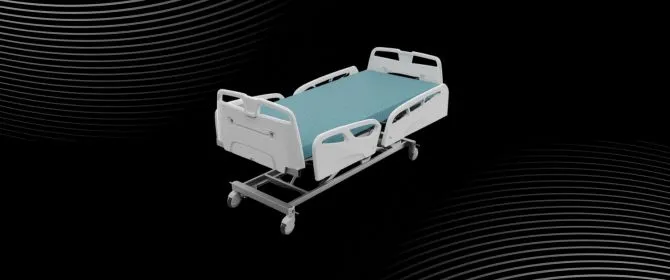
A refined patient-care product case study focused on structural design, usability, and product-development improvements for healthcare environments.
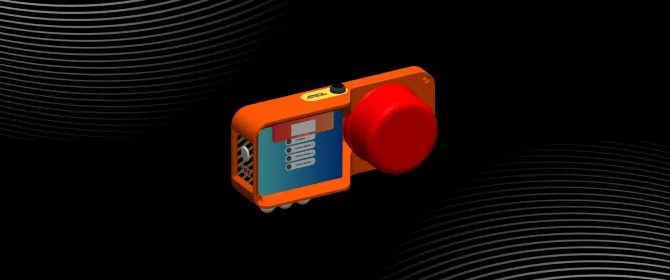
Engineering and product validation work that improved performance, manufacturability, and real-world readiness for a critical detection solution.
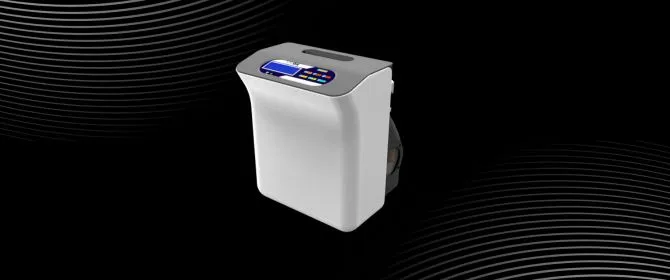
A case study focused on creating a more usable, durable, and clinically practical medical product through targeted design and engineering refinement.
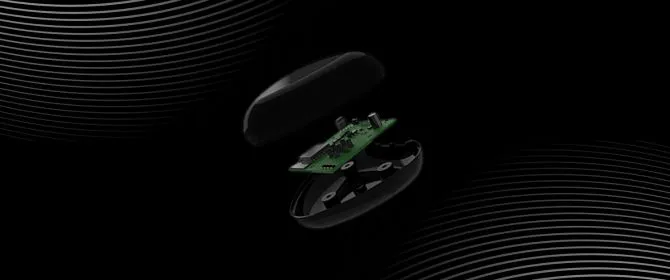
A smart-device control product case study covering industrial design, engineering integration, and market-ready development.
 Download Brochure


