
Call Us 24/7
+91 6357173693
Send Us Mail
business@imacengineering.com
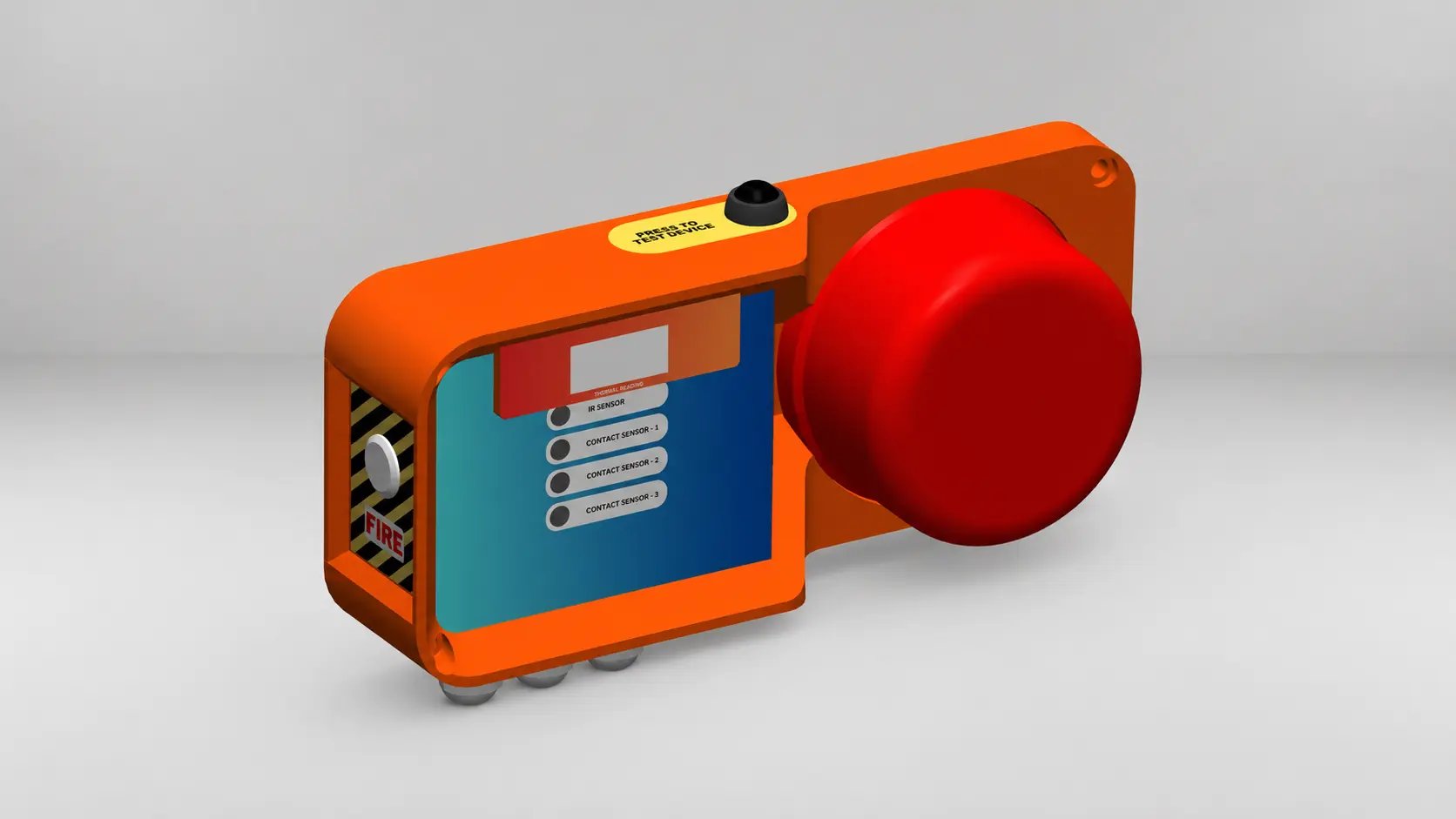
The coal mining fire detection system needed faster suppression response, multi-sensor monitoring, electronics protection, manual override, and dust-resistant performance for a harsh surface miner environment.
This case study covers iMAC Design and Engineering Services’ engineering work on an automatic fire detection and suppression system for a high-value surface mining machine operating in coal mines. The existing system had a 2 to 3 minute delay between fire detection and extinguisher activation, long enough for a fire to cause extensive damage.
| Product | Automatic Fire Detection and Suppression System |
|---|---|
| Industry | Mining / Industrial Safety |
| Services | Hardware Product Development, Electronics Integration |
| Stage | Full system redesign |
| Design Scope | Sensor architecture, electronics relocation, suppression logic, manual override, display panel |
| Operating Environment | Coal mine surface miner, extreme temperatures, pervasive coal dust |
The client, responsible for security and safety operations on a coal mine surface miner, needed a fire detection and suppression system that responded immediately rather than after a 2 to 3 minute delay. That delay was long enough for a fire to cause extensive damage to a high-value machine.
The new system had to meet three core requirements, the kind of structured brief that shapes every stage of our product design and development process. It needed to detect the earliest signs of combustion and trigger suppression automatically without waiting for manual intervention. It also needed a manual override option so operators could activate suppression directly in an emergency or if the automatic system malfunctioned. Finally, the entire system had to withstand the harsh conditions of a coal mine environment, including extreme engine compartment temperatures and pervasive coal dust.
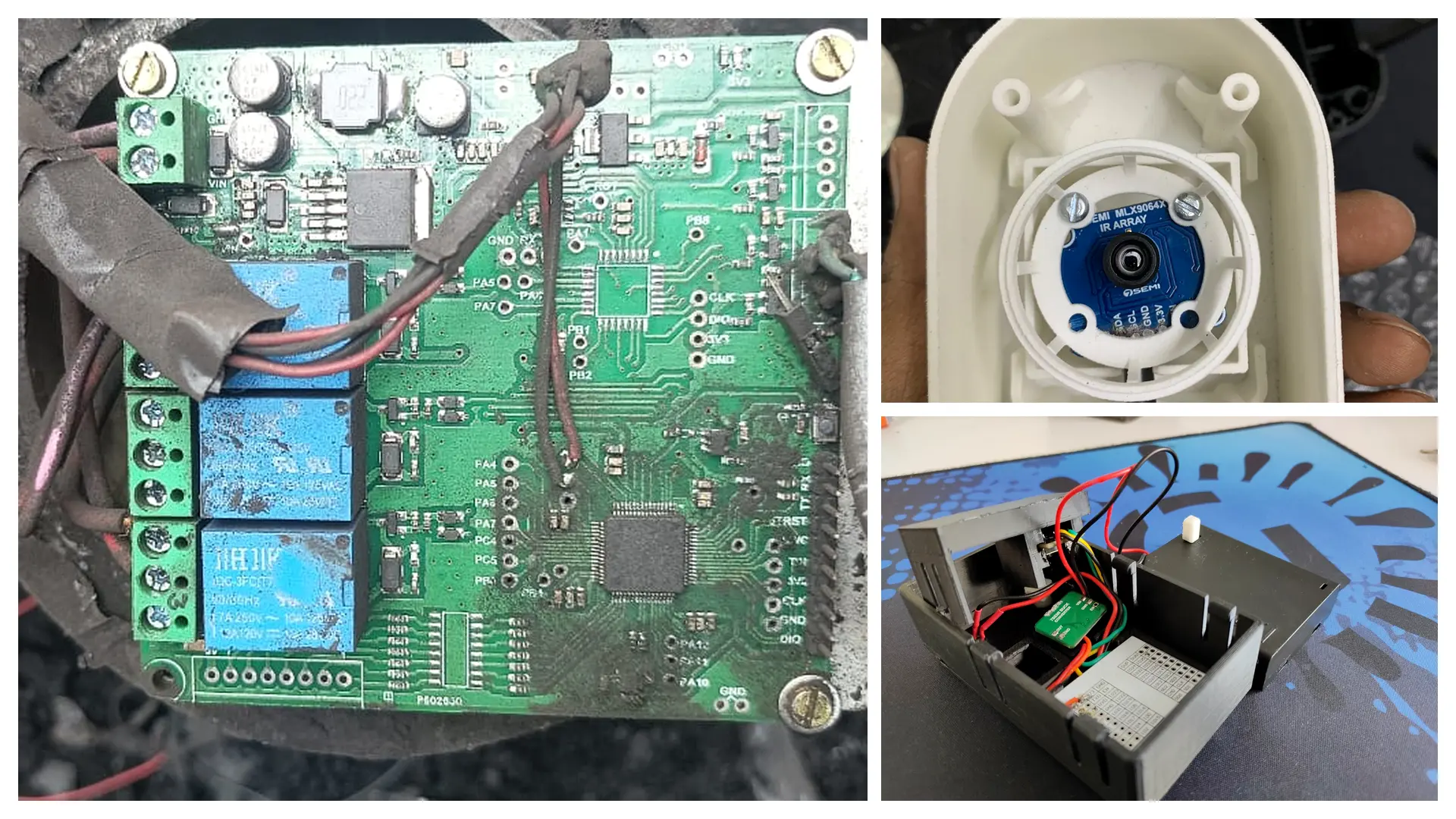
The enclosed engine compartment of the surface miner regularly reaches temperatures well above the safe operating limits of conventional electronics. Standard PCBs are rated only up to 70°C, creating a constant risk of component failure from heat exposure alone.
The original system relied on a single IR sensor unit, which proved too slow. Flashpoints escalated rapidly before the sensor registered a detection event, leaving the system unable to respond in time.
Coal dust presented a severe contamination hazard. When the initial prototype used conventional filters, conductive coal particles still penetrated the housing and triggered short circuits in sensitive components.
Housing both sensors and controllers together in the engine space created logistical difficulties for cooling and made the system vulnerable to both dust infiltration and heat bleed between components.
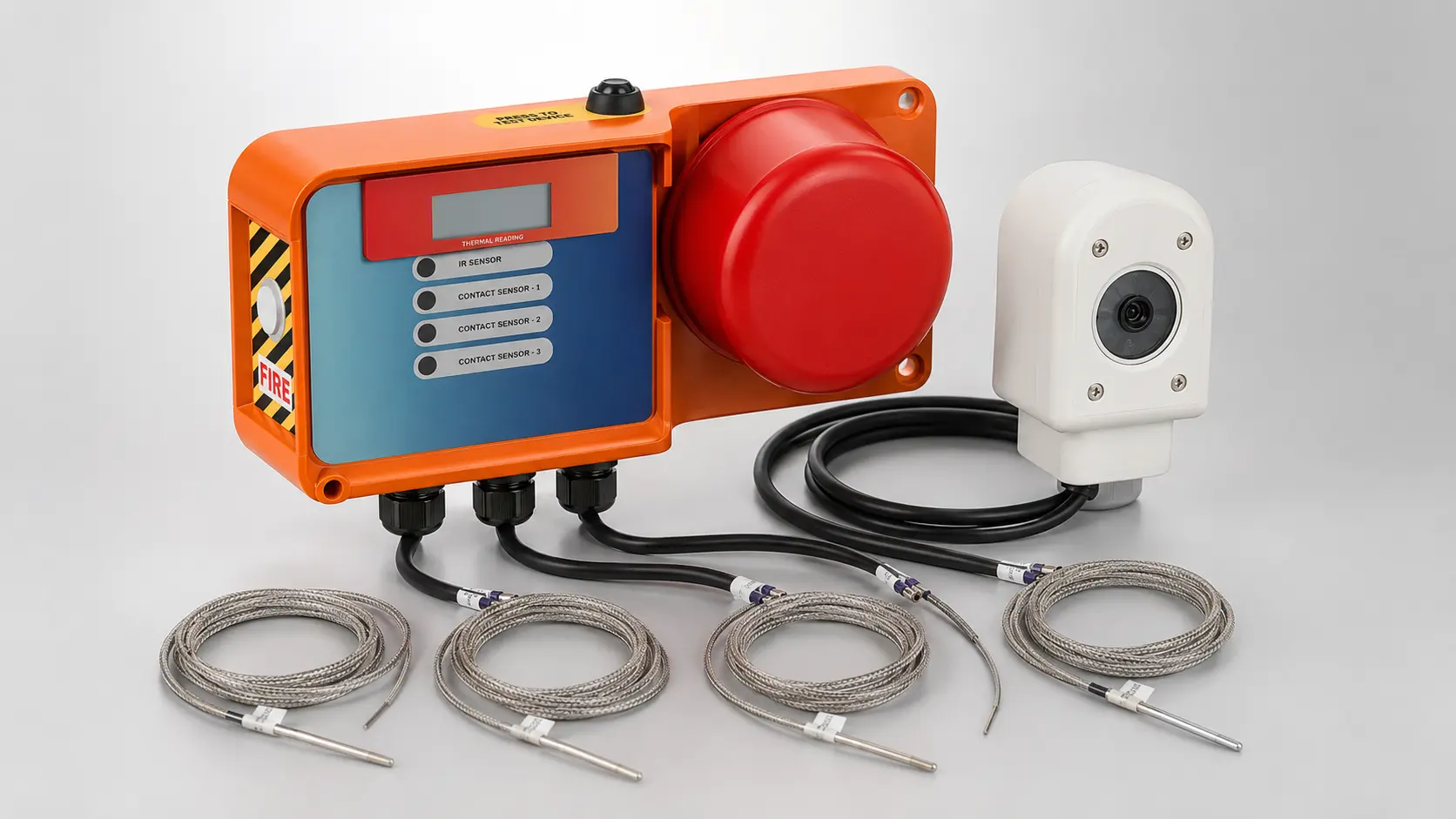
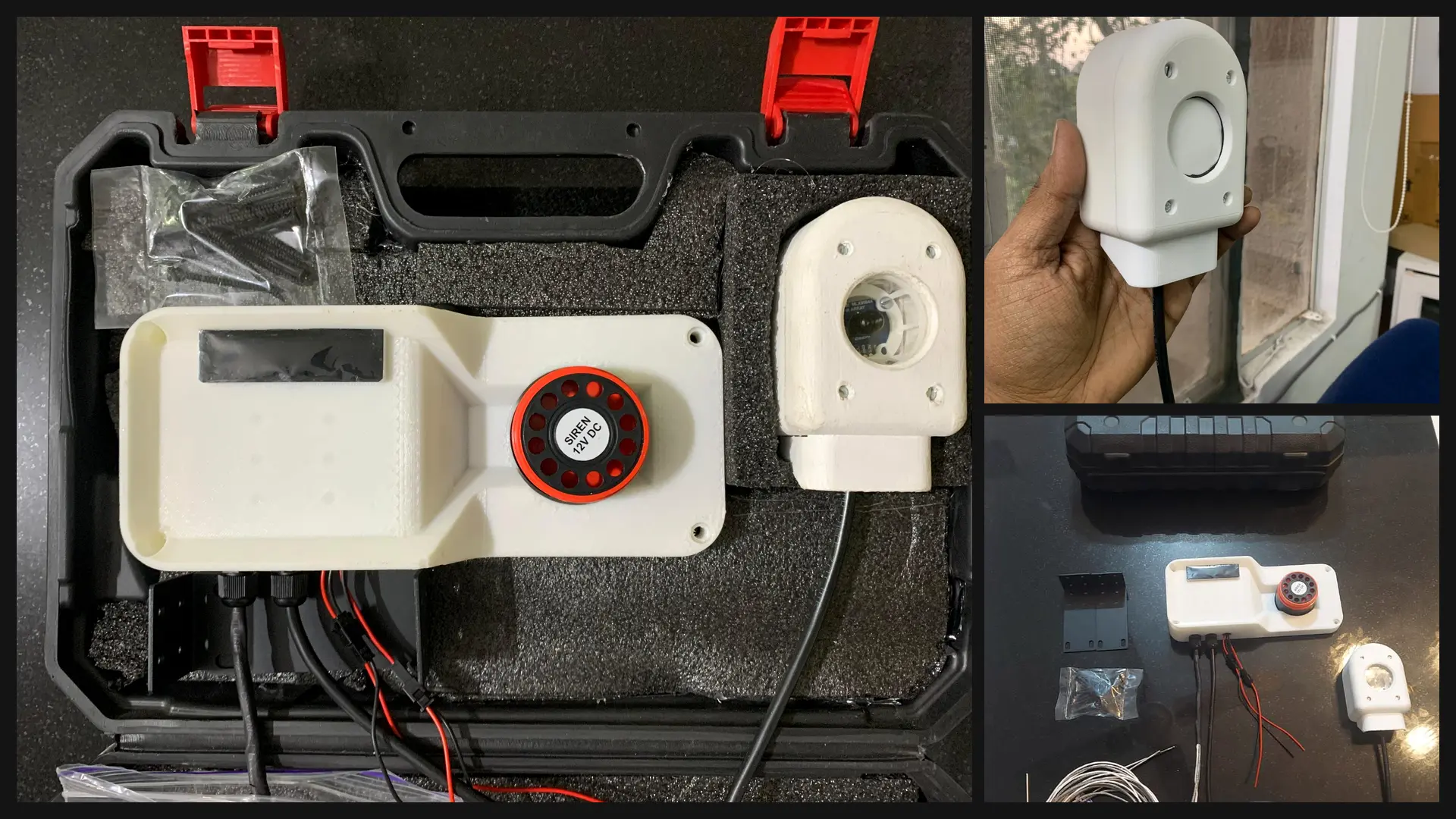
The team reimagined the system with a modular, multi-sensor architecture. An IR detector mounted on top of the engine compartment was paired with four contact thermocouples installed at critical hotspots: the fuel pump, hydraulic distribution line, turbocharger, and main engine bay. This combination provided precise, localized temperature monitoring and instant flashpoint detection across the machine.
The main controller and PCBs were integrated into a single enclosure in the crew cabin, where ambient temperatures remain within safe limits and dust intrusion is minimal. This eliminated the need for active cooling systems including Peltiers and fans, which had proven unreliable in coal dust conditions.
The contact thermocouples were encased in sealed wire harnesses to resist water and particulate ingress throughout the machine environment.
The system issues an early warning alarm when temperatures rise to between 150°C and 200°C. When any IR sensor registers temperatures exceeding 300°C to 350°C, the system triggers automatic extinguisher activation without requiring operator input.
A clearly marked manual override button allows operators to trigger suppression directly, reinforcing safety redundancy. A display panel gives operators real-time visibility of temperatures and system status, with diagnostics covering fuse and light integrity checks.
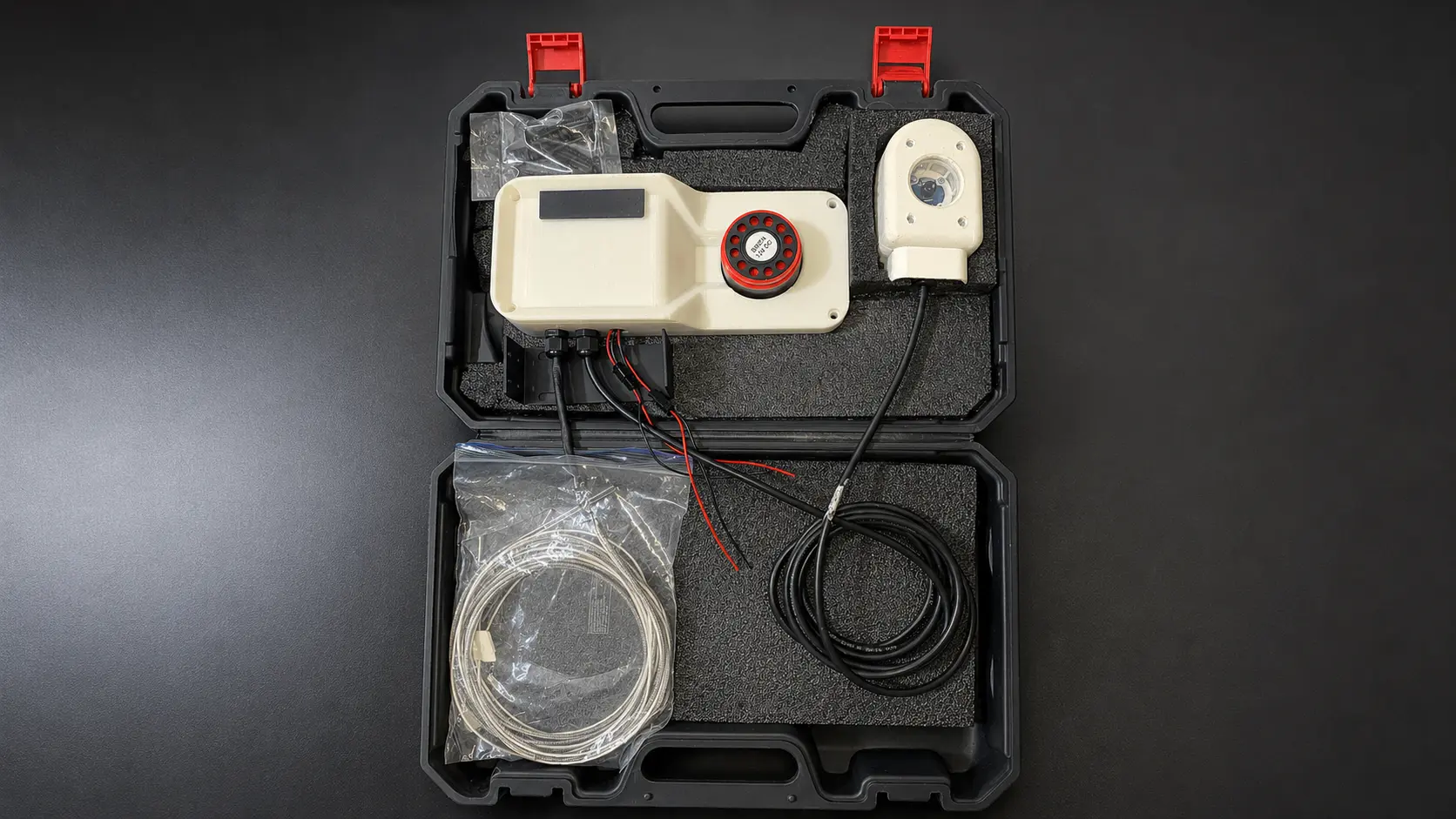
The redesigned system delivered marked improvements in speed, reliability, and maintainability.
The combination of the IR flashpoint sensor and strategically placed contact thermocouples facilitated near-instantaneous fire detection, significantly reducing reaction time compared to the prior solution. Relocating the controller and electronics into the crew cabin protected them from extreme heat and coal dust, eliminating cooling system dependencies and avoiding contamination-related failures. The design for manufacturing approach behind the modular layout allows individual components to be replaced or updated without taking the entire machine offline, greatly reducing downtime.
Operators reported increased confidence in the machine’s safety, backed by visible temperatures, reliable alarms, and a manual override. The system met and surpassed the client’s objectives for immediate fire response and robust, dust-resistant performance in demanding mining environments.

A smart-device control product case study covering industrial design, engineering integration, and market-ready development.
An integrated redesign covering dashboard layout, IP69-rated battery enclosure, mudguard redesign, and brand-consistent charging port integration.
A surgical body warmer redesign covering True HEPA filtration, collapsible hose, triple-sensor safety logic, and modular maintenance.
A mechanical design case study covering seamless headband construction, 90° earcup articulation, and an injection molding-ready sliding adjustment mechanism.
 Download Brochure


