

Rapid vs. Traditional Prototyping: Which Is Right for You?
Compare rapid prototyping vs traditional prototyping: cost, speed, precision, ROI, and which method fits your hardware product stage.
Compare rapid prototyping vs traditional prototyping: cost, speed, precision, ROI, and which method fits your hardware product stage.
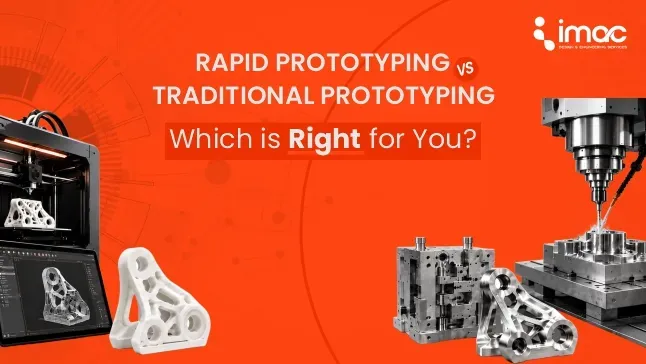
A prototype is not just a sample model. In hardware product development, it is a practical decision-making tool. It helps founders, engineers, investors, and manufacturers understand whether a product idea is technically possible, user-friendly, manufacturable, and commercially realistic.
One question comes up early in almost every product journey: should you choose rapid prototyping or traditional prototyping?
Rapid prototyping is faster, more flexible, and useful when your design is still evolving. Traditional prototyping still matters when your product needs production-grade material, tight tolerances, durability testing, or regulatory validation.
The right choice depends on where you are in the product development process, what you need to test, and how costly a mistake would be after tooling or manufacturing begins.
| Use Rapid Prototyping When... | Use Traditional Prototyping When... |
| Your design is still evolving and may change | Your design is stable and ready for performance testing |
| You need to test size, form, fit, or ergonomics | The product requires regulated or certified materials |
| You are showing the product to investors or stakeholders | You are validating under real load, heat, or pressure |
| You are in the Design Research or Product Design stage | You are in the Engineering, Tooling, or Manufacturing stage |
| The cost of a wrong decision is low right now | A post-tooling mistake would be expensive to fix |
| You need 5 or more design iterations within budget | The product is a Class II or Class III medical device |
Rapid prototyping is the process of quickly creating a physical model or functional sample from digital design data. You start with CAD files and use 3D printing, CNC machining, laser cutting, vacuum casting, or other short-run fabrication methods to produce a physical part fast.
The main purpose is the speed of learning.
Instead of waiting weeks to know whether a design direction works, rapid prototyping accelerated the product development process by helping you test size, form, fit, assembly, ergonomics, and basic functionality within days. This is especially useful during the Product Design, Engineering, and Prototyping stages of development.
A CAD model may look correct on screen, but real-world handling reveals problems quickly: the grip is uncomfortable, the wall thickness is too low, the assembly is difficult, or the product feels larger than expected. Rapid prototyping exposes those problems early, when design changes are still cheap to make.
✓ FDM (Fused Deposition Modeling): Best for structural housings, enclosures, functional assemblies
✓ SLA (Stereolithography): Best for smooth surface finish, fine detail, visual models
✓ SLS (Selective Laser Sintering): Best for durable nylon parts, complex assemblies
✓ CNC Machining: Best for tight tolerances, metal prototypes, production-like material behaviour
✓ Vacuum Casting: Best for small batches of near-production plastic parts after design stabilizes
At iMAC, the team uses a combination of these methods depending on the product stage, enclosure type, and validation goal. Projects like Mecha Comet (consumer electronics) and Pill Cap (medical IoT) both used rapid prototyping in early stages before moving into engineering and production.
Need rapid prototyping support for your hardware product?
Traditional prototyping applies once your design direction is clear and you need to validate durability, material behaviour, tolerance, manufacturability, or performance under actual use conditions.
Sheet metal parts need bend accuracy checks. Machine components need load testing. Medical device parts need material traceability and cleaning resistance. Rapid prototyping supports shape and layout review in these cases, but traditional prototyping gives you the confidence you need before tooling and manufacturing.
Traditional methods include CNC machining in final materials, sheet metal fabrication, injection molding from soft or hard tooling, and hand-built mechanical assemblies. The lead time is longer and cost per iteration is higher, but the output is production-representative.
Rapid and traditional prototyping serve different stages of product development. Rapid prototyping helps you check whether the design direction is right. Traditional prototyping confirms whether a stable design is ready for production-level validation.
| Dimension | Rapid Prototyping | Traditional Prototyping |
| Lead time | 24–72 hours | 2–6 weeks |
| Cost per iteration | $500–$2,000 | $3,000–$15,000 |
| Material fidelity | Medium (limited options) | High (any material) |
| Precision tolerance | ±0.2mm typical | ±0.05mm achievable |
| Best for | Design refinement, form/fit | Functional validation, stress testing |
| Iterations possible | 5–10+ per project | 2–4 per budget |
| Timeline to production | 4–8 weeks | 8-16 weeks |
Rapid prototyping saves your time and cost and gives you better ROI in the early design phase. You test more versions, refine form and fit, check usability, and fix design issues faster without spending heavily on each iteration.
Traditional prototyping gives better ROI later, when the design is stable and you need functional validation, stress testing, material accuracy, or production-readiness confirmation.
Use rapid prototyping when you need fast learning and design refinement. Use traditional prototyping when you need final performance confidence before tooling or manufacturing.
Also Read: How To Build a Product Prototype - 7 Steps
Rapid prototyping wins when your product is still evolving, and you need quick design feedback.
At the concept stage, details like enclosure size, component layout, user interface, assembly method, and product form may still change. Rapid prototyping lets you test those changes physically before committing to expensive fabrication. Investors, engineers, users, and manufacturing partners understand a working model far better than CAD files or drawings.
✓ Consumer electronics enclosures
✓ Smart devices and IoT products
✓ Medical device concept models
✓ Wearable products
✓ Ergonomic handles and grips
✓ Lab equipment housings
✓ Robotic product structures
✓ Kiosk design and machine interface designs
✓ Investor demo models
✓ Assembly and packaging fit checks
These projects all share one thing: user interaction and physical form matter. A product may look correct in CAD, but once someone holds it, presses it, opens it, or assembles it, new problems appear. Rapid prototyping catches those problems before the design becomes expensive to change.
Validate your product form before the design becomes expensive to change.
When Mecha approached iMAC with the concept for a handheld computer, the design was still evolving. Enclosure size, internal component layout, and button placement all needed physical validation before engineering resources were committed.
iMAC ran multiple rapid prototype iterations using ABS plastic enclosures, testing grip, assembly fit, and component housing at each stage. Design issues that would have been costly to fix in production tooling were identified and resolved during the prototyping phase.
The result: a validated alpha prototype ready for investor review. Concept through product engineering to prototype, without multiple vendors.
This is exactly the use case rapid prototyping is built for: design still open, decisions still cheap to change.
Traditional prototyping is the right choice when your product needs testing under realistic conditions.
This applies when material performance, mechanical load, heat, pressure, sealing, safety, or regulatory documentation matters. A rapid prototype shows the product's shape, but it does not prove whether the final product will perform safely and reliably under real operating conditions.
A medical device enclosure may need cleaning resistance, material traceability, fit accuracy, stable assembly, and proper compliance planning before it can move toward validation. A machine part may need to withstand repeated loads. A sheet metal structure may need correct bending, fastening strength, and vibration performance. In these cases, traditional prototyping moves the product closer to manufacturing reality.
✓ Regulated material certification
✓ Biocompatibility requirements
✓ Heat, pressure, or load testing
✓ Tight mechanical tolerances
✓ Long-term durability testing
✓ Production-grade surface finish
✓ Injection molding feasibility validation
✓ Sheet metal bending validation
✓ Functional testing under real operating conditions
For regulated products, especially medical and healthcare devices, early rapid models support design discussion. They cannot replace validation using certified materials, controlled processes, and production-relevant methods.
The NOX product series, nitrous oxide analgesia machines for dentists and paediatricians, required metal enclosures, performance validation, and a compliance-aligned design process before manufacturing could begin.
Early rapid prototypes supported layout review and assembly checks. But the final prototype stage required production-grade methods: sheet metal fabrication, load testing, and full manufacturing feasibility review.
iMAC's ISO 13485:2016-certified design process supported the compliance pathway from concept through to manufactured product. The NOX series now includes four products: NOX Artha, NOX Urja, NOX Advaita, and NOX Digital Ananta. All taken from concept to manufacturing under one roof.
When the product is a Class II or Class III medical device, the prototype needs to prove more than form and fit.
The strongest approach is not a choice between rapid and traditional. It is rapid first, traditional later.
A hybrid strategy uses both methods at the right stage. Early in the project, rapid prototyping helps you explore ideas, reduce uncertainty, and improve the design. Later, traditional prototyping validates performance, manufacturing feasibility, material behaviour, and production readiness.
This avoids two expensive mistakes. Spending too much too early on a design that may still change. Or relying on quick prototypes when your project actually needs production-grade validation.
Rough concept prototypes: 3D printed parts, foam models, or basic mockups to validate size, shape, and product direction
Functional rapid prototypes: Detailed CAD with internal electronics, moving parts, assembly features, or basic mechanisms
Engineering refinement: Wall thickness, tolerance, draft angle, fasteners, component placement, material selection, DFM review
Production-like prototypes: CNC-machined parts, sheet metal parts, vacuum-cast components, soft tooling samples, or injection molding trial parts
Validation before tooling: Fit testing, performance testing, user trials, DFM checks, BOM review, assembly review, supplier coordination
Each prototype answers a specific question and moves the product closer to manufacturing.
Reduce design uncertainty before your product reaches manufacturing.
Pill Cap is a medical IoT device for senior citizen patients. The design needed to be user-friendly, manufacturable, and reliable enough for real-world medical use.
iMAC used rapid prototyping in the early stages to validate the enclosure form, internal PCB placement, and assembly mechanism. Multiple 3D printed iterations confirmed the physical design before engineering resources were committed.
Once the design stabilized, the team moved into injection molding tooling and production. A full hybrid process executed under one roof.
Pill Cap completed the journey from concept to injection molded production. It is now in the revenue stage.
This is a hybrid strategy in practice: rapid prototyping to learn, traditional manufacturing to scale.
If you are in the Design Research or Product Design stage, rapid prototyping is usually the right choice. The design is still open to change, so flexibility matters more than production accuracy.
If you are in the Engineering, Tooling, or Manufacturing stage, traditional prototyping becomes more important. You need to confirm performance, tolerance, material behaviour, and manufacturability.
If the product goes into healthcare, medical devices, food-contact applications, industrial safety, or other regulated environments, you cannot treat material selection casually.
A prototype made from substitute material helps with form and fit, but it does not support proper validation. In those cases, use traditional prototyping with certified or production-relevant materials. This is especially true in medical device development, where material, usability, cleaning, durability, and documentation directly influence the compliance pathway.
This is the most important question.
If a mistake after tooling would be minor, rapid prototyping may be enough for your current stage. If a mistake after tooling would cause mold modification, supplier delays, failed validation, or production rejection, traditional prototyping is the safer investment.
Tooling locks in decisions. Once molds, fixtures, dies, or production setups exist, design changes become harder and more expensive to make.
Rapid and traditional prototyping both have a clear role in hardware development. Rapid prototyping helps you move quickly, test ideas, and improve designs before major investment. Traditional prototyping validates material behaviour, tolerances, performance, and production readiness.
The right method depends on your product stage, technical risk, budget, material requirements, and the cost of making the wrong decision.
Here is the practical rule: if you are still iterating, use rapid prototyping. If you are 60 days from a manufacturing commitment, you need a traditional prototype before you commit.
For most hardware products, the strongest approach is hybrid: rapid prototyping to learn fast, traditional prototyping to validate confidently before tooling and manufacturing.
At iMAC Design & Engineering Services, the team supports product development through structured Design Research, Innovation & IP Strategy, Product Design, Engineering, Prototyping, Tooling, and Manufacturing stages. We help you choose the right prototyping route before committing to production. With 140+ projects delivered, triple ISO certification (ISO 9001, ISO 13485, ISO 27001), and a track record across medical devices, consumer electronics, IoT, and industrial equipment, iMAC gives you one team from idea to revenue.
For your next hardware product, contact iMAC Engineering to start with a prototyping strategy that reduces risk from the first build.
Rapid prototyping uses digital fabrication methods like 3D printing, CNC machining, and vacuum casting to produce physical parts quickly from CAD data, typically in 24 to 72 hours. Traditional prototyping uses production-representative methods such as sheet metal fabrication, injection molding, and machined assemblies. It takes 2 to 6 weeks but produces parts that closely match final production behaviour. Rapid prototyping is best for design validation and iteration. Traditional prototyping is best for performance validation and manufacturing readiness.
Rapid prototyping costs $500 to $2,000 per iteration. Traditional prototyping costs $3,000 to $15,000 per iteration. Rapid prototyping is significantly cheaper per build, which is why it works well in the early design stage when multiple iterations are needed. Traditional prototyping is more expensive but reduces risk before tooling commitments that can cost $10,000 to $100,000 or more.
Yes, but with limits. Rapid prototyping is useful for form, fit, and usability checks on medical device concepts. It supports early design review and stakeholder communication. However, it cannot replace validation using production-grade materials, certified processes, and regulatory documentation. For Class II and Class III medical devices, traditional prototyping using compliant materials and controlled fabrication methods is required before design freeze and submission. iMAC's ISO 13485:2016-certified design process supports both stages for medical device clients.
A hybrid prototyping strategy combines rapid and traditional prototyping at different stages of the same project. Rapid prototyping handles early design iterations, testing form, fit, assembly, and usability when changes are still cheap. Traditional prototyping handles later validation, confirming material performance, tolerances, and manufacturing feasibility before tooling. Most hardware products benefit from a hybrid approach because it reduces wasted spend early and reduces production risk late.
Ask three questions. First: where are you in the design process? If the design is still evolving, use rapid prototyping. If the design is stable, use traditional prototyping. Second: does your product require regulated material certification? If yes, traditional prototyping with certified materials is necessary. Third: what is the cost of being wrong after tooling? If a post-tooling mistake would be expensive, invest in a traditional prototype before committing.
Rapid prototyping typically produces parts in 24 to 72 hours for simpler geometries. More complex assemblies may take 3 to 7 days including post-processing and assembly. The full rapid prototyping phase of a product development project, from initial concept to validated rapid prototype, typically runs 4 to 8 weeks depending on the number of iterations required.

 Download Brochure


