
Call Us 24/7
+91 6357173693
Send Us Mail
business@imacengineering.com
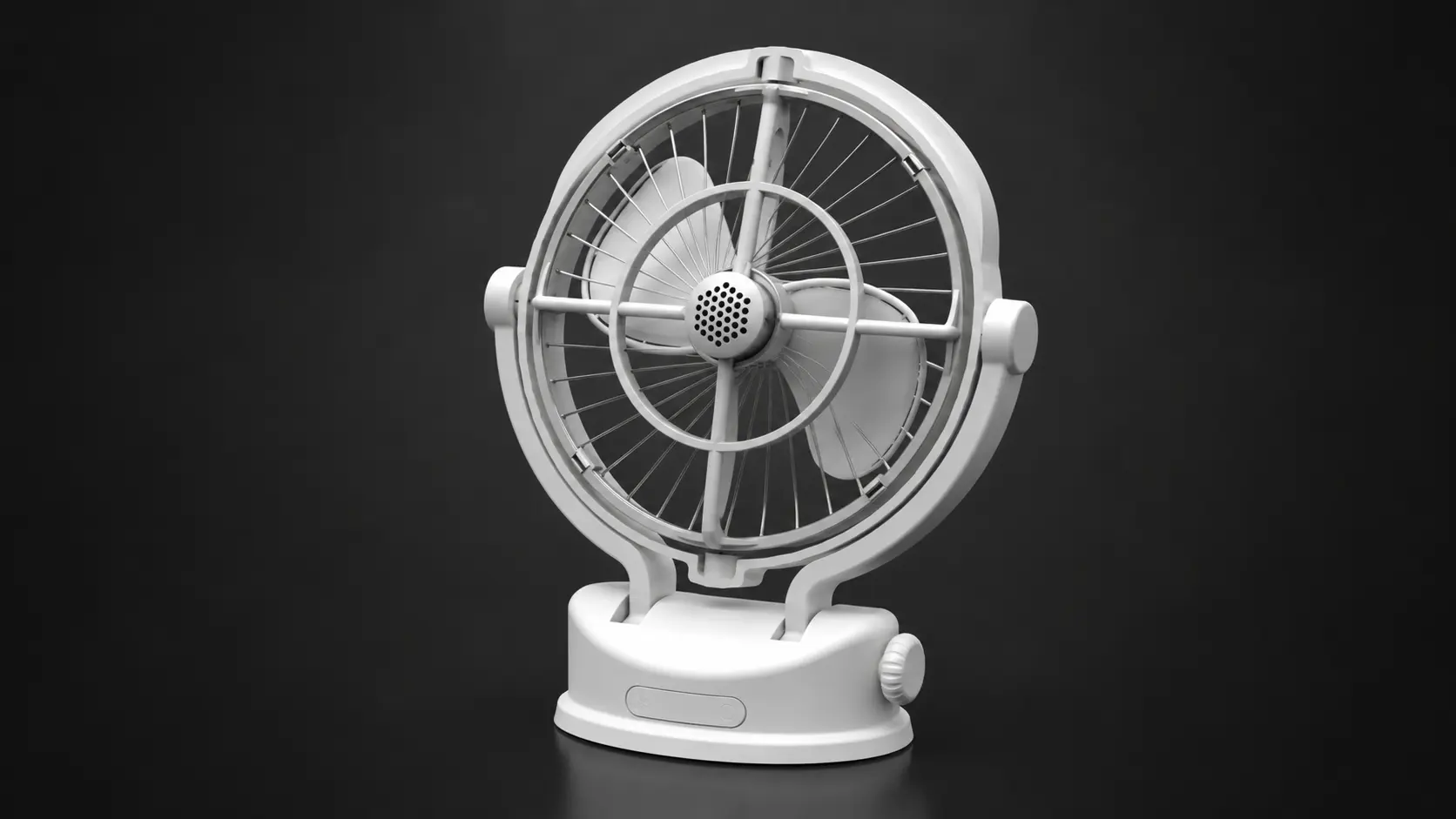
The portable caravan fan needed a smarter redesign with 360° motorized rotation, lever-based locking, remote control, timer modes, battery protection, and LED feedback for modern caravan use.
This case study covers iMAC Design and Engineering Services’ product redesign work on a portable caravan fan. The project started from an existing caravan fan available in the market and developed it into a new product with upgraded mechanical and electronic features suited to modern caravan use.
| Product | Portable Caravan Fan |
|---|---|
| Industry | Consumer Electronics / Caravan Equipment |
| Services | Hardware Product Design and Development, CAD Engineering |
| Stage | Redesign – mechanical and electronic upgrade |
| Design Scope | Rotation mechanism, locking system, remote control, timer, battery protection, LED indicators |
The client wanted a modern, reliable, and user-friendly caravan fan built on the foundation of an existing market product. The new design needed to address control limitations, improve rotation locking reliability, protect the caravan battery during extended use, and add adjustable speed and timing.
Key requirements included:
The original fan used a basic button-operated control system and relied on mechanical spring plungers to prevent unwanted rotation during caravan movement. Spring plungers introduce wear-and-tear risks over repeated use and gave the user limited control over the rotation function. A more reliable and user-friendly locking solution was needed.
Ensuring reliable battery performance without draining the caravan’s power source was a significant challenge. Caravans operate on limited battery capacity, and a fan running without any protection or time management could deplete the battery entirely, leaving the user without power for other systems.
Adding remote control, timer modes, battery protection, and LED feedback into a redesigned fan while keeping the form compact and suitable for caravan use required a careful system redesign. Each new feature had to work together without adding unnecessary complexity or bulk.
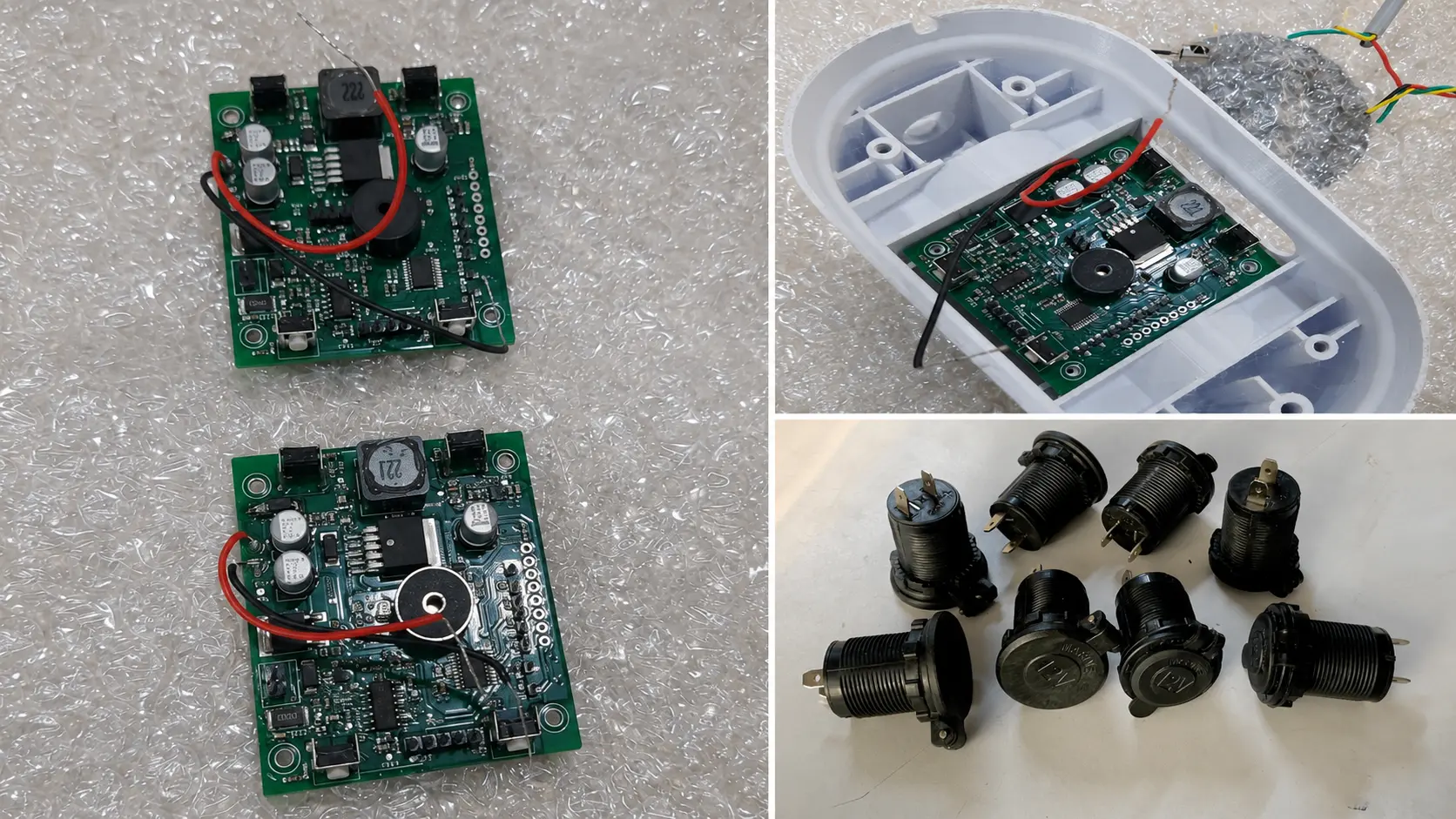
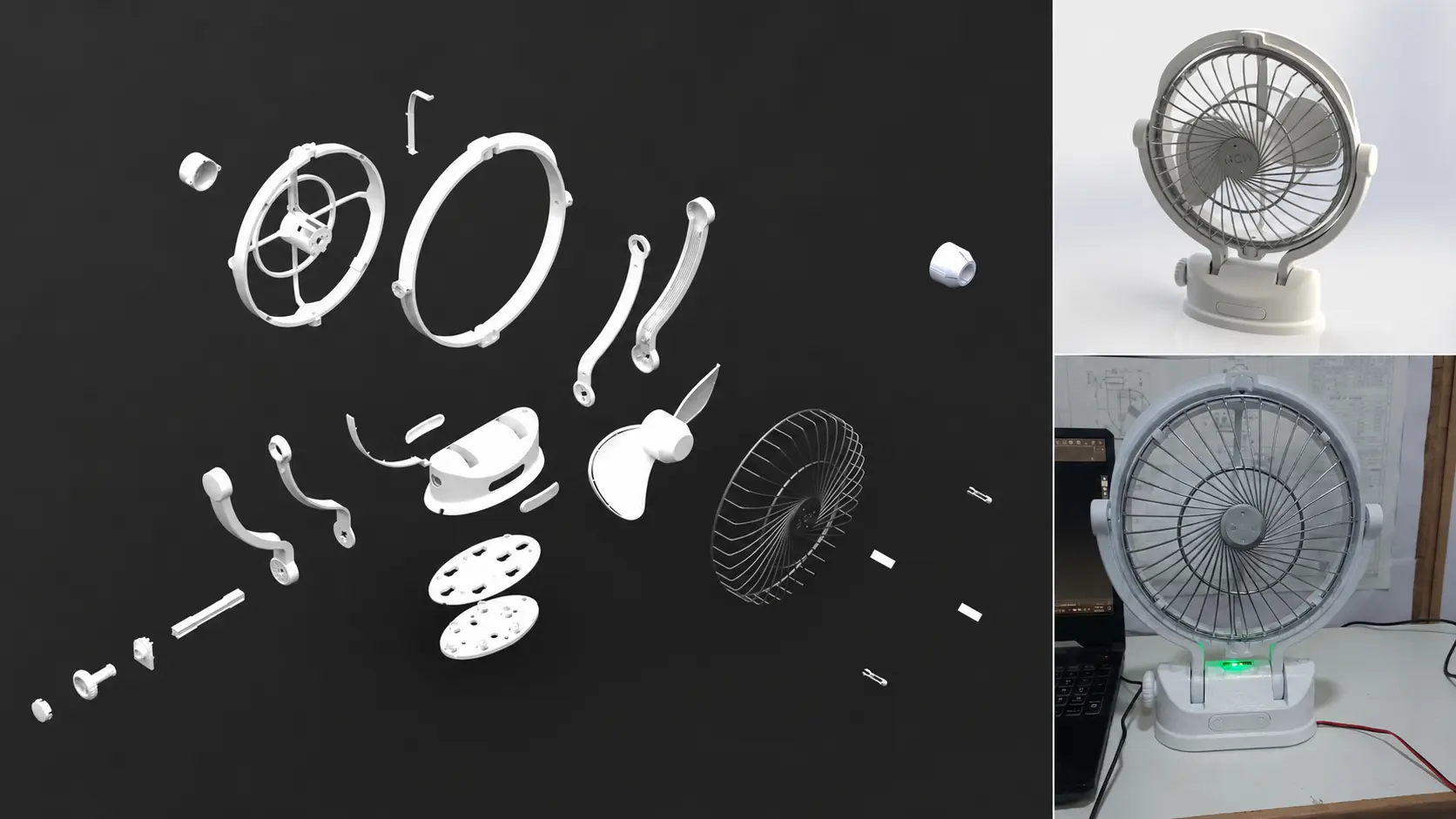
The fan was redesigned with a full 360-degree motorized rotation mechanism and a remote-controlled system while keeping the design practical for manufacturing and future assembly. The mechanical spring plungers were replaced with a lever-based locking mechanism, giving the user a simple, reliable way to manually lock and unlock the rotating function without the wear-and-tear risk of the original system.
A timer feature was added with three modes: 2-hour, 4-hour, and 6-hour settings. This gives the user control over operating duration and prevents the fan from running indefinitely, directly reducing unnecessary battery consumption in caravan use.
An undervoltage cutoff system was implemented to protect the caravan battery. The system automatically shuts off the fan when the battery voltage drops too low, preventing over-discharge and protecting the power source for other caravan systems.
LED indicators were added to display the active timer setting and variable speed levels, giving the user clear, real-time feedback on the fan’s current operating state without needing to interact with the control interface.
| Feature | Before | After |
|---|---|---|
| Control system | Basic button-operated | Remote-controlled |
| Rotation locking | Mechanical spring plungers | Lever-based locking mechanism |
| Timer | None | 2-hour, 4-hour, and 6-hour modes |
| Battery protection | None | Undervoltage cutoff system |
| User feedback | None | LED indicators for timer and speed |
| Rotation | Standard | Full 360-degree motorized |
The redesigned caravan fan delivered improvements across functionality, safety, and ease of use.
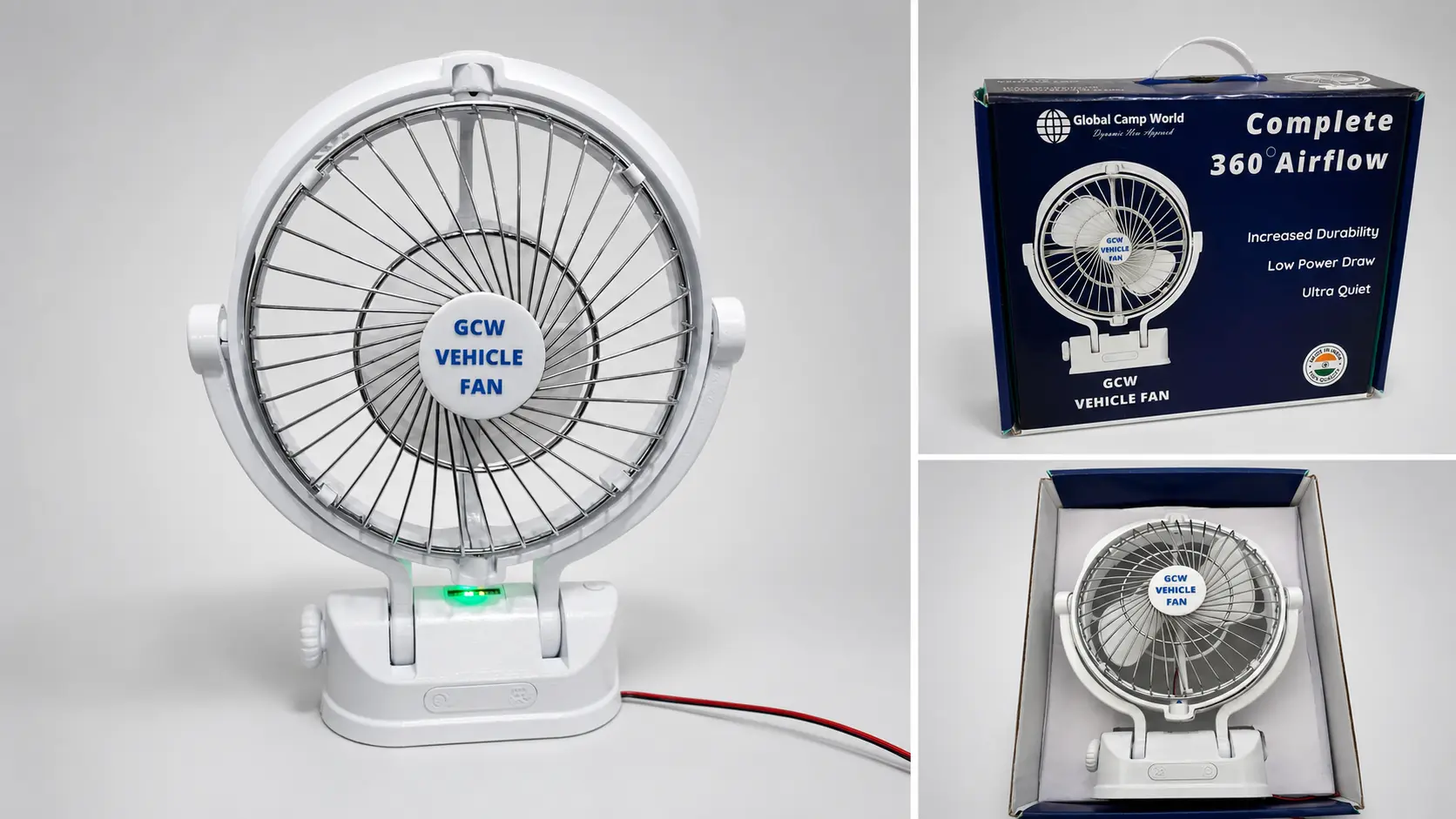
Remote control operation and the lever-based locking mechanism made the fan significantly easier to operate in a mobile caravan environment. The timer modes and undervoltage cutoff system protect the caravan battery during prolonged use, addressing one of the most practical concerns for caravan users. LED indicators give real-time feedback on operating state, reducing the need for the user to interact directly with controls.
The project took an existing basic mechanical fan and delivered a new product with smart control features, reliable battery protection, and a more practical user experience for modern caravan use.

A smart-device control product case study covering industrial design, engineering integration, and market-ready development.
An integrated redesign covering dashboard layout, IP69-rated battery enclosure, mudguard redesign, and brand-consistent charging port integration.
A case study focused on creating a more usable, durable, and clinically practical medical product through targeted design and engineering refinement.
A mechanical design case study covering seamless headband construction, 90° earcup articulation, and an injection molding-ready sliding adjustment mechanism.
 Download Brochure


