

Product Design and Development: A Complete Guide for 2026
Product design and development: definition, key stages, mistakes to avoid, real examples, and how the right agency reduces risk and accelerates success.
Product design and development: definition, key stages, mistakes to avoid, real examples, and how the right agency reduces risk and accelerates success.
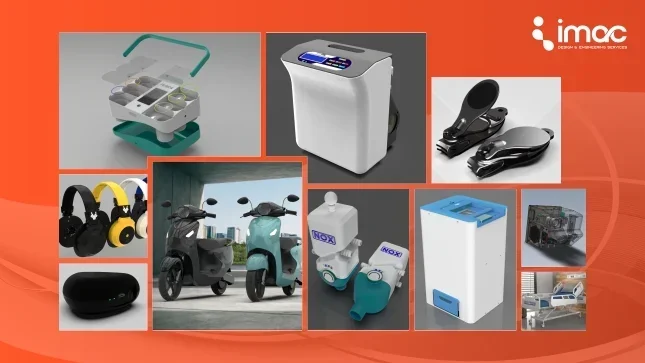
Samsung's foldable smartphones to Tesla's electric vehicles are proof that outstanding design is about creating products that capture imagination while solving real problems.
The numbers tell an interesting story about the power of strategic product design. Companies that make design central to their development process are achieving up to 32% higher revenue growth and 56% increased shareholder returns.
Yet despite these impressive statistics, many businesses still struggle with the fundamentals. While the best-performing companies in terms of product innovation deliver a 76% success rate, other companies manage only 51%. The difference? A systematic approach to product design and development that combines creativity with decision-making, user-centred thinking with business strategy, and innovative concepts with practical execution!
So, how do you bridge this gap and build successful products? This guide covers the essential steps of product design and development to help you build better products. Let's get started.
✓ Best-performing companies in terms of product innovation deliver a 76% success rate.
✓ Product design and development is how you go from an idea in your head to a product people can use and buy.
✓ Product design focuses on how the product looks and works for the user, while product development focuses on how it’s built and functions in the real world.
✓ Ignoring any product design and development stage = shortcuts to failure. Following them = excellent innovation.
✓ Working with a product design and development agency helps you build the right product faster and with fewer costly mistakes.
✓ Most product failures happen because businesses skip research, overbuild, or ignore user needs — all avoidable with the right planning and team.
✓ Product design focuses on how the product looks, feels, and works, making sure it's easy to use, solves a problem, and appeals to the customer.
✓ Product development is about how the product is built, including engineering, prototyping, testing, and getting it ready for launch.
Product design and development solutions together form a complete process from research to final product delivery.
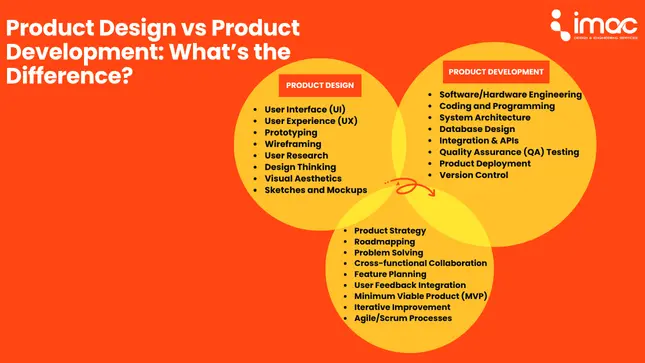
Product Design vs Product Development: What’s the Difference?
Product design is focused on how a product looks, feels, and functions for the end user. It’s about solving real problems through intuitive design, user research, and creative thinking.
Product development, on the other hand, is about bringing that design to life. It involves engineering, coding, testing, and deploying the final product so it’s functional, stable, and ready to use.
While both are distinct, they work hand-in-hand.
The collaboration zone is where design and development work together in terms of strategy, iteration, and teamwork happen where user needs are aligned with technical availability.
Together, they convert an idea into a working, practical product for the market.
Think about how Apple designs and develops its products — for example, the Apple Watch. It started as a simple idea: a compact device that brings health, fitness, and connectivity to your wrist.
But to make that idea a reality, Apple moved through several critical stages, from research and prototyping to engineering and launch. Every stage played a key role in shaping the final product we know today.
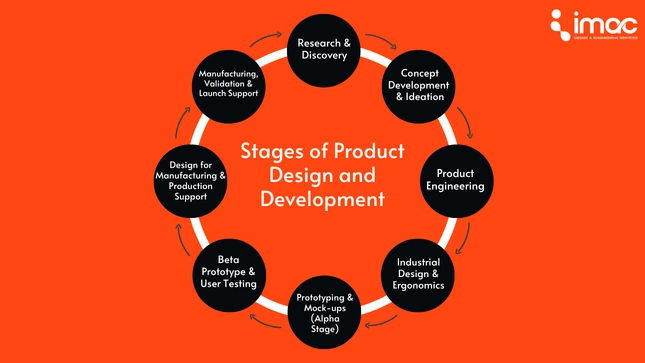
Read our blog on - 8 key stages of product design and development, and learn how this process works in detail.
1. You Get Direction
Most early-stage product ideas lack structure. A good agency helps you shape your idea, define the right features, remove what’s unnecessary, and give it a clear direction, before you waste money building the wrong thing.
2. You Reduce the Risk of Failure
Agencies have seen what makes products fail, poor validation, complicated features, bad UX, skipped testin, etc. They help you avoid those completely from day one.
3. You Avoid "All" Problems
Without an agency, you often end up managing 4–5 freelancers or departments - designers, engineers, QA, PMs. That leads to miscommunication and slow progress. An agency gives you one accountable team, aligned from day one.
4. You Build for What Customers Need
A good agency helps you uncover what users want and make sure the product solves that, not just what you think they want.
5. You Save Time
Yes, you might be able to DIY parts of the process. But an experienced agency helps you get it right the first time, which saves months of back-and-forth later.
6. Nothing Left Unclear
No, “we’ll figure it out later.” Agencies bring clear workflows, roadmaps, and deliverables, so you always know what’s happening, what’s next, and what’s needed from you.
Thinking of working with one?
Here’s a quick tip on how to choose the best product design and development company:
Look for experience in your industry, a strong portfolio and case studies, clear processes, and most importantly, a team that listens to your vision and challenges it in the right way.
1. Skipping User Research
Too many teams build what they think users want, without actually asking them.
Avoid it:
Talk to real users early. Validate the problem before you invest in the solution. 95% of new products fail due to poor market research or a lack of user need.
"If you don’t talk to your users, you’re designing in the dark."
– User Research Proverb (popular in UX circles)
2. Building Too Much, Too Soon
Trying to launch with a “perfect” product often leads to delays, improper features, and wasted budget.
Avoid it:
Start small. Focus on your Minimum Viable Product (MVP) and improve from there.
3. Ignoring Design Functionality
A great-looking product that’s hard to use will fail fast. Good design is about usability, not just looks.
Avoid it:
Prioritise user experience. Test designs before you build.
4. Not Considering Manufacturing Early (for physical products)
Products often run into production issues because materials, costs, processes, and manufacturing requirements weren’t considered during design.
Avoid it:
Try to first work with a good design and development team early to make sure your design is feasible.
5. Poor Handoff Between Design and Development
When teams are disconnected, important details get ignored, leading to bugs, delays, and frustration.
Avoid it:
Ensure designers and developers collaborate from day one. Use shared tools, reviews, and feedback loops.
6. Underestimating Time and Budget
Many businesses assume they can build faster and cheaper than reality, which often leads to heavy expenses and wastage of time.
Avoid it:
Plan for testing, revisions, and delays. Build buffer time and budget into your project.
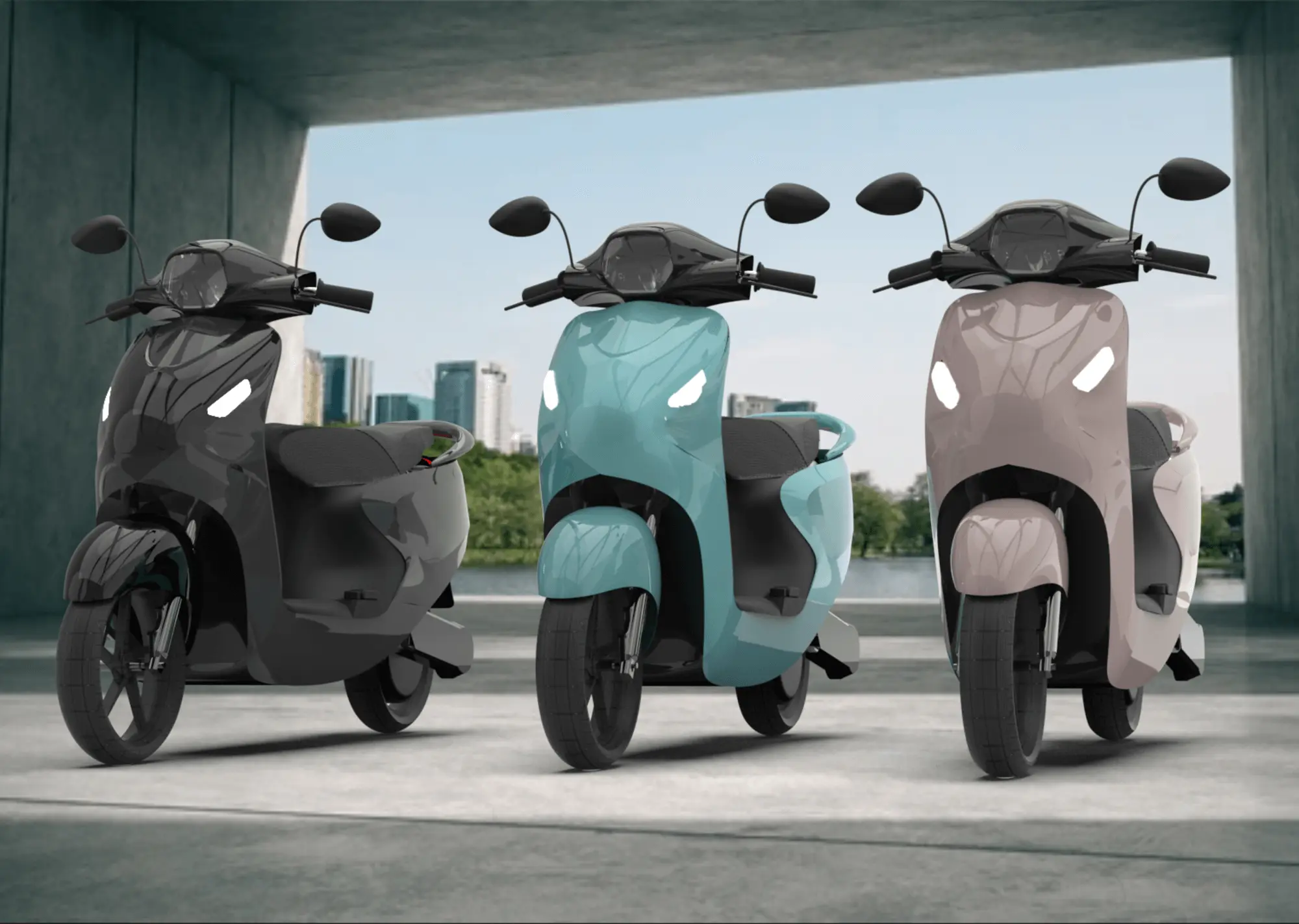
The best way to understand the impact of good product design is to look at real examples.
1.Electric Vehicle
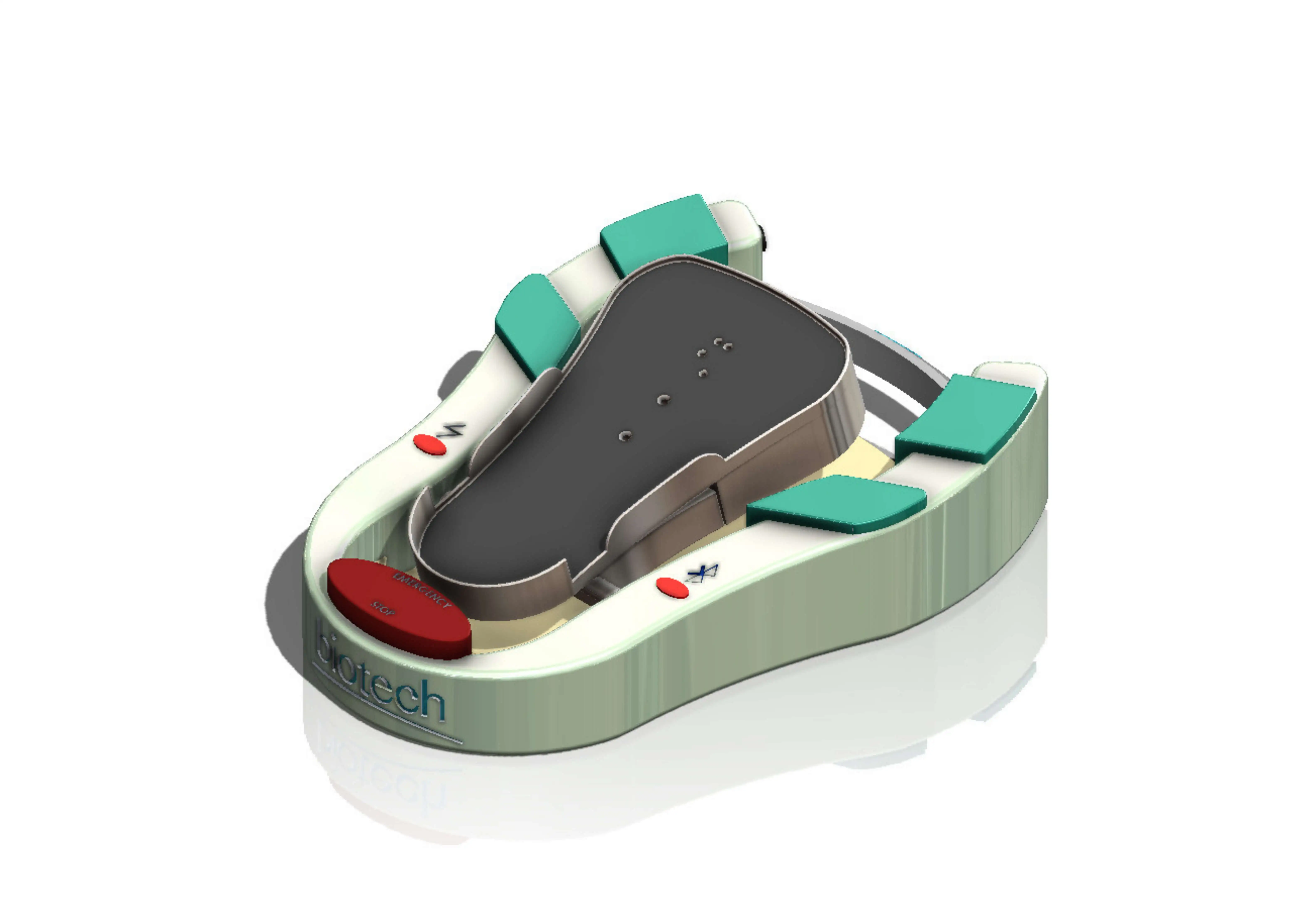
2.FootPadel
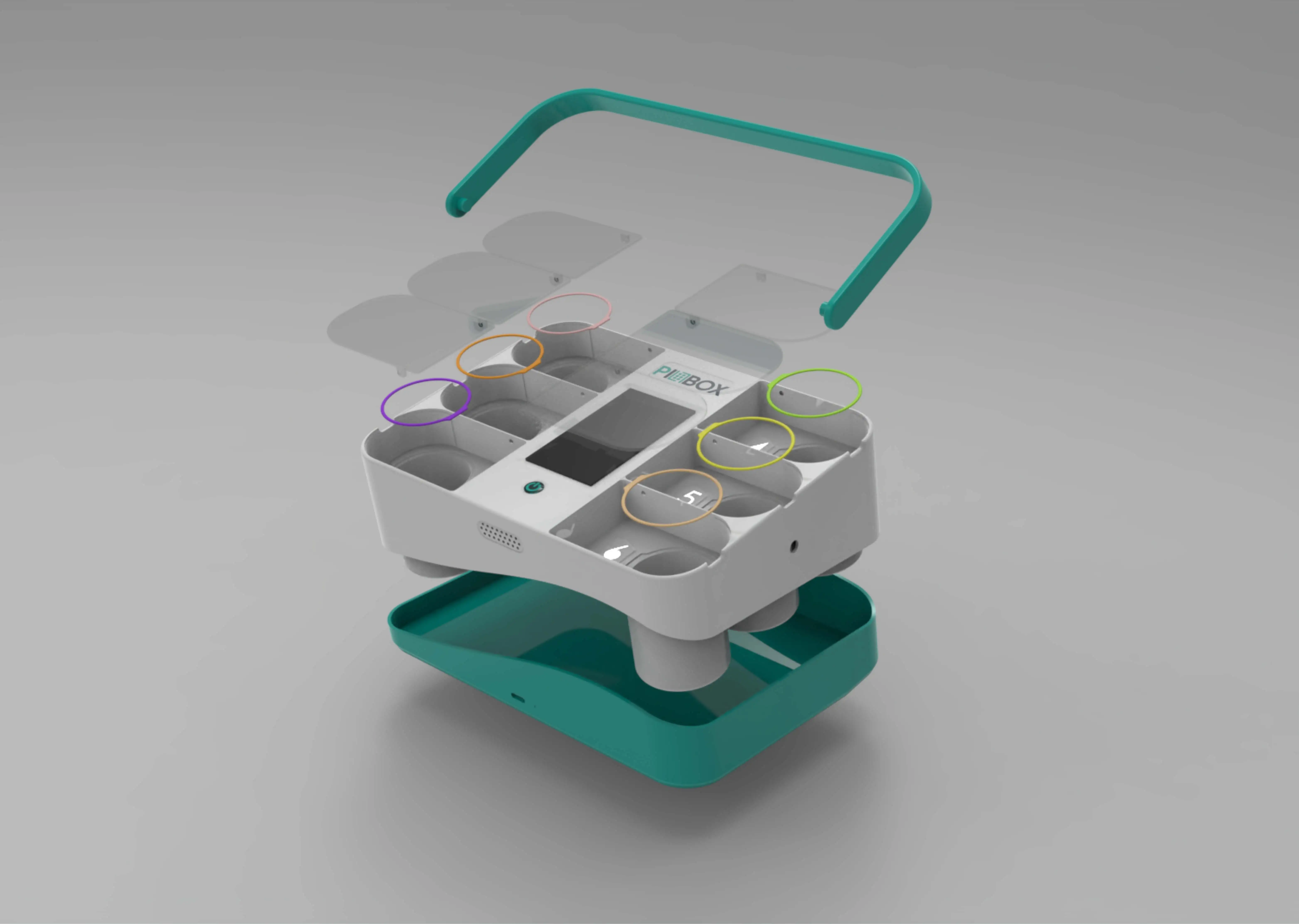
3.Smart Pill Box
Product design is planning how a product looks and works; product development is building and launching it.
Key stages include research, ideation, design, prototyping, testing and iteration, engineering, manufacturing, and market launch.
Prototyping makes early versions to test ideas and fix problems.
Market research is very important; it helps understand what people want.
Prototyping saves money by finding mistakes early before full production.
Product development duration is highly variable, depending on a product's complexity, industry, and the resources invested.
The cost to develop a product from scratch is highly variable, depending on factors such as its complexity, the resources required, and the scope of work involved. For a detailed estimate, please contact us.
Got a brilliant product concept but unsure how to bring it to life? We handle everything - ideation, prototyping, engineering, and manufacturing support - so you can focus on your vision.
Connect with iMAC Design & Engineering, and let's discuss how we can help with your product design and development.

 Download Brochure


