

Minimum Viable Product (MVP): Meaning, Purpose, Benefits
Understand what a Minimum Viable Product is, its purpose, benefits, and types, and how an MVP helps test user demand, lower costs, and drive smarter product development.
Understand what a Minimum Viable Product is, its purpose, benefits, and types, and how an MVP helps test user demand, lower costs, and drive smarter product development.
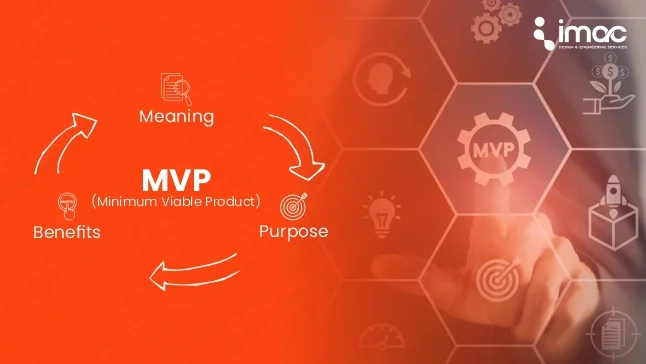
You have a product idea. Now, the real challenge is knowing if anyone wants it.
Building everything is a massive risk. This is where the Minimum Viable Product (MVP) strategy comes in. An MVP is the simplified version of your product that allows you to test your core idea with real users.
Practically, this means your team launches a functional product with only essential features, allowing you to observe actual use - how do people interact with it? Where do they hesitate? What do they ignore? It’s not about being first to market with a perfect product; it's about being first to learn what the market truly needs, saving you time and capital!
✓ Minimum viable product (MVP) exists to validate demand, not to showcase features.
✓ MVP's meaning is rooted in learning speed and risk reduction.
✓ MVP's full form emphasizes viability, not incompleteness.
✓ Advantages of MVP include lower cost, faster feedback, and clearer product direction.
✓ Different MVP types exist to answer different validation questions.
✓ MVP product development supports better engineering and business decisions.
MVP’s full form is a minimum viable product, which is a version of a product with just enough features to be usable by early customers who can then provide feedback for future product development.
MVP's meaning does not stand as a prototype (which tests feasibility) or a beta (which tests quality). An MVP tests business viability and user value.
✓ Minimum: The smallest set of features that deliver on your core value proposition.
✓ Viable: It must work well enough to provide that value to early users.
✓ Product: It must be a real, functional experience that a user can interact with.
In physical products, MVPs help teams understand product design and development without committing to full-scale manufacturing or complex engineering too early.
The purpose of an MVP is to validate a product idea with real users before scaling development, cost, or production.
Why MVPs exist in practice:
✓ To confirm there is a real problem worth solving
✓ To test user acceptance and not internal assumptions
✓ To identify technical and design risks early
✓ To guide investment decisions using data
According to multiple startup failure analyses shared across founder communities (YC, Indie Hackers, CB Insights), over 35% of failed products collapse due to a lack of market need. MVPs exist to expose that reality early.
Want to Build an MVP to Validate Your Product?
Different products require different MVP approaches, and that is why there is no single format.
| Type of MVP | What it is | Best for testing |
| Functional MVP | Early-stage product testing | Core usability and value |
| Prototype MVP | Mechanical products | Feasibility and form |
| Pilot MVP | B2B or industrial use cases | Real-world adoption |
| Concierge MVP | Service-heavy solutions | User demand before automation |
| Feature-limited MVP | Existing platforms | Feature relevance |
| Single feature MVP | A working product that focuses on doing one thing exceptionally well | Whether that single core feature provides enough value on its own |
| Piecemeal MVP | Using existing tools and APIs to cobble together the core service | Feasibility and user experience of the core service loop |
The main advantages of MVP are faster validation, lower risk, and clearer product direction.
✓ Reduces Time to Market: You launch something meaningful faster, allowing you to start the learning cycle immediately.
✓ Lowers Development Costs: You only build what's necessary to test, avoiding expensive detours into unwanted features.
✓ Attracts Early Adopters: A focused product attracts a niche audience who provide the most passionate and valuable feedback.
✓ Provides a Foundation for Feedback: You get concrete data on user behavior, not opinions on hypotheticals. This de-risks your product roadmap.
✓ Increases ROI Potential: By aligning future development with proven user needs, you ensure your budget is spent on features that drive growth and retention.
An MVP is not a one-size-fits-all solution, but it makes the most sense in these scenarios:
✓ When entering an unknown market. You have assumptions that need validation.
✓ When resources (time, money, team) are constrained. You can't afford a large-scale failure.
✓ When the problem is clear, but the solution is not. You need user interaction to shape the final product.
✓ Before seeking significant funding. Traction and data from an MVP are far more convincing to investors than a slick pitch deck alone.
If your product is in a heavily regulated space (e.g., medical devices) or the cost of failure is high, a more phased prototype approach might precede the MVP. For most tech-enabled services, starting with an MVP is the smartest path.
This strategic approach is part of a broader discipline in product design and development. It ensures you build with purpose!
The main goal of a minimum viable product (MVP) is to validate whether a product idea solves a real problem for real users.
An MVP helps validate a business idea by collecting real user feedback instead of relying on assumptions. User behavior, engagement, and feedback reveal whether the solution works, needs refinement, or should be stopped, before large investments are made.
A minimum viable product (MVP) is the simplest version of a product that delivers core value and enables teams to gather meaningful feedback from users with minimal development effort.
An MVP should answer questions, not raise new ones. When engineering, usability, and intent are aligned from the start, product teams gain clarity faster. iMAC Engineering approaches MVP development with this mindset, building only what is necessary to test, measure, and validate.
If you are evaluating whether an MVP fits your product stage, let’s talk.

 Download Brochure


