

Most Common Product Design Mistakes and How to Avoid Them
Learn the most common product design mistakes and how to avoid them to create user-friendly, functional, and successful products that truly stand out.
Learn the most common product design mistakes and how to avoid them to create user-friendly, functional, and successful products that truly stand out.
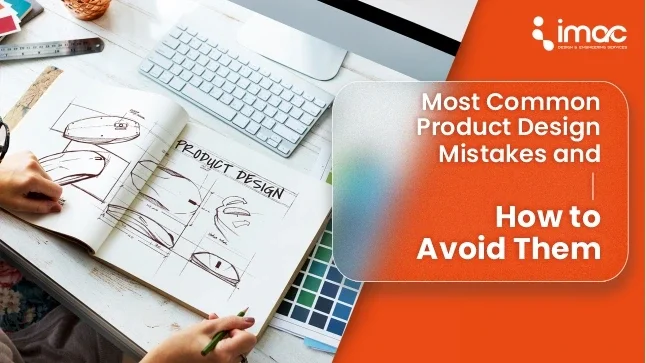
You launched a product believing it would revolutionize your market, only to discover users struggled with basic navigation within the first week.
This scenario is more common than you think. After working with over 200 startups and SMEs, we have observed that most product failures come from preventable product design mistakes rather than flawed concepts.
The difference between successful launches and costly redesigns often comes down to identifying critical design issues during the prototyping phase.
As a specialized design and development company, we have identified the key mistakes that cause product failures and created clear solutions to prevent them. This blog reveals those product design errors and shows you exactly how to avoid them from the start.
✓ 45% of product delays are caused by poor DFM practices. Start designing with production in mind.
✓ 70% of product failures are linked to bad user experience — errors that could be caught with early testing.
✓ Startup funding is wasted on redesigns, often due to wrong material choices.
✓ Nearly half of regulated product launches miss deadlines because compliance wasn’t built into the design process from the start.
✓ Our experience shows catching errors at prototyping saves major rework costs compared to post-launch fixes.
✓ Ignoring scalability today can kill tomorrow’s growth.
1. Skipping User Research and Validation
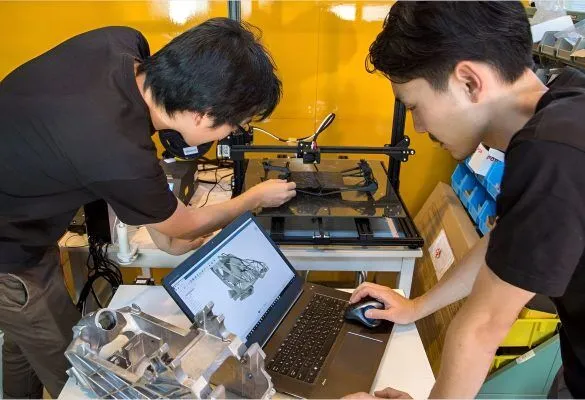
The Mistake: Designing based on assumptions rather than actual user needs.
Why It Happens: Teams rush to build without understanding their target audience, thinking they know what users want.
We once worked with a fintech startup that spent 8 months building a complex dashboard. When we conducted user testing during our product design process, we discovered users only needed three core functions. The rest was overwhelming noise.
How to Avoid It:
✓ Conduct user interviews before designing
✓ Create user personas based on real data
✓ Test concepts with target users early
✓ Validate assumptions through surveys and feedback
Pro Tip: Start with the problem, not the solution. As one Reddit user perfectly put it: ‘I wish more companies would ask 'what problem are we solving?' before asking 'what features should we build?'
2. Not Designing for Manufacturability (DFM)
The Mistake: Creating prototypes that can't be efficiently manufactured at scale.
Why It Happens: Designers optimize for function or aesthetics without considering production realities.
A hardware startup came to us with a beautiful prototype that required 47 separate components. After applying DFM principles in our product design process, we reduced it to 12 components while maintaining functionality.
How to Avoid It:
✓ Involve manufacturing engineers early in design
✓ Use standard manufacturing processes where possible
✓ Simplify complex geometries and assemblies
✓ Consider material costs and availability
✓ Plan tooling requirements from day one
Among the most critical mistakes to avoid in product design is failing to plan for manufacturability.
3. Overcomplicating the User Interface(UI)
The Mistake: Adding too many features, buttons, and options to a single screen.
Why It Happens: Feature creep and the desire to showcase all capabilities at once.
Reddit User Insight: "Every app thinks it needs to do everything. Sometimes I just want one thing to work really well."
How to Avoid It:
✓ Follow the 5-second rule: Users should understand your interface in 5 seconds
✓ Use progressive disclosure to reveal advanced features
✓ Prioritize actions based on user frequency
✓ Apply Hick's Law: Reduce choices to speed decisions
✓ Create a clear visual hierarchy
Complexity is the enemy of conversion.
4. Poor Material Selection
The Mistake: One of the most overlooked product design mistakes is choosing the wrong material. Decisions are often made based on cost or appearance, rather than real-world performance. The result? Products that crack, warp, or fail prematurely. Beyond functionality, poor material choices can increase costs and even damage your brand’s reputation.
Why it happens: Teams prioritise budget or aesthetics over strength, durability, or sustainability. Without deep material knowledge, they miss how plastics, sheet metals, or composites behave in real-world conditions.
How to Avoid It :
✓ Always match materials to the product’s intended use — heat resistance, wear, ergonomics, and sustainability matter.
✓ Involve prototyping experts who can test multiple materials before committing to production.
✓ Embedding material testing into the product design that reduces the risk of costly redesigns.
In our project - The Journey of Nox Advaita, material selection was critical to achieving both durability and aesthetic appeal. By leveraging prototyping, we tested and validated options until we found the balance that worked. This real-world validation ensured the final product performed smoothly, reinforcing why material testing is a non-negotiable step in successful product design.
5. Ignoring Ergonomic Factors
The Mistake : Even technically sound designs fail if they’re hard to use. Ignoring ergonomics can lead to poor adoption, especially in consumer and medical products where user comfort is critical.
How to Avoid It:
✓ Test prototypes with actual users.
✓ Adjust for grip, weight, and posture. Use CAD simulations to validate ergonomics, but always confirm with real-world handling.
Pro Tip: In a medical device project, redesigning handle contours based on surgeon feedback improved usability dramatically (a small design change that made a huge difference).
6. Failing to Plan for Compliance and Regulations
The Mistake : Many teams overlook compliance until the last stage. But if your product doesn’t meet ISO, FDA, or CE standards, you can face recalls, legal penalties, or rejection from entire markets.
According to a McKinsey report, nearly 45% of product launches in regulated industries are delayed due to compliance issues.
How to Avoid It:
✓ Research standards during the product design & development itself, not after prototyping.
✓ For medical devices, follow FDA medical device regulations, and for global markets, align with ISO standards(ISO 9001 for quality management, ISO 16355-5 for solution strategy, and ISO 8887 for technical product documentation).
✓ Involve compliance experts early and document every step for audits.
7. Skipping Usability Testing
The Mistake : Skipping usability testing is like flying blind.
Most of the product failures are linked to poor user experience. Without testing, you only discover problems after launch, when fixes are most expensive.
How to Avoid It:
✓ Build usability testing into your product design process.
✓ Even simple 3D-printed mockups reveal critical flaws.
✓ Conduct A/B testing, user observation, and task completion trials.
8. Poor CAD-to-Prototype Handoff
The Mistake : One common mistake is assuming CAD models will convert smoothly into prototypes.
Small details like tolerances, fit, and assembly clearances often get lost between digital design and physical build.
How to Avoid It:
✓ Work with experienced prototyping partners who understand CAD limitations.
✓ Always run tolerance checks and build test parts before full assembly.
9. Overlooking the Cost of Tooling
The Mistake : Designers sometimes forget that every complex part requires tooling, moulds, or fixtures.
A brilliant design on screen can become financially unviable when mould costs hit tens of thousands.
How to Avoid It:
✓ Involve tooling experts early.
✓ Simplify part design and explore modular tooling options.
✓ Always estimate tooling costs before finalising the design.
10. Neglecting Scalability
The Mistake : A product that works at small volumes may fail when scaled to mass production. Designs that require manual assembly or rare materials quickly become bottlenecks.
For a client scaling from 500 to 20,000 units, we redesigned the assembly to reduce manual steps.
How to Avoid It:
✓ Think long-term. Ask: “Can this design be scaled to 10,000 units without costing a lot?”
✓ Work with manufacturers early to ensure scalability.
11. Not Protecting Intellectual Property (IP)
The Mistake : Design teams sometimes reveal concepts without securing IP. This can lead to copyrights, patent disputes, or lost competitive advantage.
How to Avoid It:
✓ Document everything.
✓ Explore patents, design registrations, and NDAs with partners.
✓ Build IP checks into your product design process.
12. Ignoring Reverse Engineering Insights
The Mistake : Reverse engineering competitors’ products provides invaluable lessons, yet many teams skip it. As a result, they repeat mistakes others have already made.
How to Avoid It:
✓ Disassemble competitor products, study materials, assembly methods, and design choices. Use this insight to refine your design.
In one of our reverse engineering projects, we discovered a competitor’s part had hidden weaknesses. We designed ours stronger, which became a key selling point.
13. Rushing to Market Without Iterative Prototyping
The final mistake is skipping iterations to save time. Rushing means hidden errors go unnoticed until launch.
How to Avoid It:
✓ Commit to multiple rounds of prototyping.
✓ Validate every iteration with real-world testing before scaling up.
The best product design solutions come from integrating prototyping early in the process.
Ignoring manufacturability, skipping prototyping, poor material choices, weak ergonomics, and compliance oversights.
Involve users early, prototype iteratively, plan manufacturability, ensure compliance, and validate materials.
Prototyping identifies errors early, saving cost, time, and ensuring user-centered, manufacturable designs.
Overcomplicated geometries and poor material selection increase costs; involve manufacturing engineers right from the concept stage.
Avoiding design mistakes isn’t about being perfect, but it is about being prepared. From manufacturability to ergonomics, every choice in the product design process shapes cost, usability, and speed to market.
At iMAC Design and Engineering, we’ve seen how a small oversight can disturb a launch, and we’ve also seen how the right design decision at the right time can completely change the outcome. That experience is what drives our process, and it’s what gives our clients the confidence to move forward.
Whether it’s your first product or your next big innovation, we’re here to make sure your journey is smoother, smarter, and free from the common mistakes that hold so many others back.

 Download Brochure


